Recent Post

Showing posts with label Cameras and Camcorders. Show all posts

Wednesday, September 26, 2012

Blackmagic Cinema Camera

Blackmagic Design has debuted the Blackmagic Cinema Camera at the NAB show in Las Vegas.


Blackmagic Cinema Camera is going to join the compliment of mixing software, 3D processors, hubs, and converters as another fine product. The quality of this high-end camera is in the compliment of Canon's EF-mount and Zeiss ZF lenses, 2.5K (2592x2192) resolution and uncompressed file formats.


Blackmagic Cinema Camera Key Features

  • High resolution 2.5K sensor allows improved anti aliasing and reframing shots.
  • Super wide 13 stops of dynamic range allows capture of increased details for feature film look.
  • Built in SSD allows high bandwidth recording of RAW video and long duration compressed video.
  • Open file formats compatible with popular NLE software such as CinemaDNG 12 bit RAW, Apple ProRes and Avid DNxHD. No custom file formats.
  • Includes no custom connections. Standard jack mic/line audio in, BNC 3 Gb/s SDI out, headphone, high-speed Thunderbolt I/O technology, LANC remote control and standard DC 12-30V power connection.
  • Capacitive touch screen LCD for camera settings and slate metadata entry.
  • Compatible with extremely high quality Canon EF and Zeiss ZF lenses.
  • Supports 2.5K and 1080HD resolution capture in 24, 25, 29.97 and 30 fps.
  • Thunderbolt connection allows direct camera capture via included Media Express software and supports live waveform monitoring via the included Blackmagic UltraScope software.
  • Includes a full copy of DaVinci Resolve 9.0 color grading software.

What's more surprising than Blackmagic entering the camera market is the price: US$2,995

Monday, September 17, 2012

Sony Introduces the World’s First Full-Frame Compact Digital Camera


For the first time, all the benefits of full-frame digital photography are available in a palm-sized compact camera. The new Sony Cyber-shot DSC-RX1 digital camera packs an advanced 35mm full-frame 24.3 MP Exmor CMOS sensor and exceptionally Carl Zeiss T*t 35mm f/2.0 fixed lens into a highly portable, lightweight camera body. The 35mm full-frame sensor inside the RX1 camera more than doubles the area of APS-C sensors commonly found in much bulkier DSLR cameras, allowing it to take in significantly more light while capturing content . (READ MORE)

Friday, August 31, 2012

HDMI Stisk

A HDMI Stick, for those who lived under a rock the past few month, is a small Android Base computer that comes in the shape of large STICK that can be plugged to any TVs or displays via HDMI. These Stick will then turned your monitor/tv/diplay into a compact Android Based computer and will let you play game, surf the web or watch video without the needs of a conventional PC. Simply put you can turn any good old HDMI Thanko announced its latest HDMI Stick


 Thanko announced its latest HDMI Stick with the Android Stick 4 SmartTV or ANDHDM40 than now comes powered with Android 4.0 or Android Ice Cream Sandwich. This 98x42x13mm and 40g HDMI Stick is powered by 1.5GHz Cortex A8-Allwinner A10 CPU with 1GB of RAM and 4GB of Storage (1GB is apparently used by the OS) and support pretty much everything with :

Videos 

(HD/SD) MPG 1/2/4, WMV 7/8/9(VC1), ASF, H264/H 263,MP4, FLV, 3GPP, MOV, MKV,RM/RMVB, TS, M2TS, DIVX/XVID, AVI, DAT
Audio OGG, M4A, MID, MP3, WAV, AMR, WMA,FLAC, RA, AAC

Sunday, August 12, 2012

What is Digital Cinema Projection?

Digital Cinema Projection (or Digital Cinema, for short) is a method whereby the traditional film containing the movie is replaced by an electronic copy contained on a storage device, such as a high-capacity hard drive and server. Instead of projecting light through film, digital cinema utilizes technologies such as DLP and LCOS to accomplish the task.
Replacing your 35 mm film projector with a new digital cinema projector is an upgrade for your theatre similar to replacing your cassette tapes with MP3s or CDs for your music collection.

   * Scratches, fading and jitter of film from repeat showings are a thing of the past, with the consistent picture brightness, razor sharp image quality, and vibrant colors of digital cinema projection.
   
   *Every presentation looks as if it is being presented for the first time on screen. The digital copy at the 1000th viewing is as good as the movie’s premiere with perfect reproduction of film, time and time again
   
  *And with the programming flexibility and advanced presentation options that digital cinema will allow, digital cinema can significantly expand a theatres potential revenue streams.
   
  *From spectacular 3D presentations to live sports broadcasts, leading exhibitors are capitalizing on the many benefits of digital cinema.

Tuesday, February 7, 2012

Nikon D800 with Sony’s 36 Megapixel sensor announced

Nikon’s latest monster the D800 and its amazing 36Mpix CENSOR. Offering a body as small as the actual D700, the D800 comes with stunning specs including an ISO Speed expandable to 25,600, 1080/30p or 720/60p AVCHD limited to up to 29’59” of continuos video recording with linear PCM Audio, HDR, Active D-Lighting and a six frames per second burst mode in DX mode.

Its advanced scene recognition system incorporates a 91,000-pixel RGB sensor which can detect human faces even when only using the optical viewfinder. It can also recognise a scene’s colour and brightness more accurately.

The camera has Nikon’s Multi-CAM 3500FX AF system with selectable and configurable 9-point, 21-point and 51-point coverage settings. This has improved the low-light acquisition sensitivity abilities of the autofocus sensor module and algorithms down to -2 EV.

Its start-up time is 0.12 seconds and release time lag on is about 0.042 seconds.
It can film Full HD footage which can be recorded at frame rates of 30p, 25p and 24p. At 720p resolution, it can shoot at a frame rate of 60p, 50p and 25p. Full HD recording is also possible in both FX and DX-based formats.

Tuesday, January 17, 2012

Fujifilm Announces X-Pro 1 Interchangeable-Lens Camera

Fujifilm is going to enter the mirrorless camera race. The new camera is called the X-Pro1 and is going to be avaible around next month.


Fujifilm X-Pro1 Features

The X-Pro1 is the start of an all-new camera system, with a brand new mount and lenses. It's unashamedly targeted at a high-end audience, with analogue control dials and a small set of compact, large-aperture primes to be available at launch. Fujifilm is keen to stress its future commitment to the system, with a promise of two more lenses to appear later in 2012. Key features are:
  • Fujifilm-designed 16MP APS-C X-Trans CMOS sensor
  • Novel colour filter array to suppress colour moirĂ©, no optical low-pass filter
  • EXR Processor Pro image processor
  • Dual-magnification hybrid optical / electronic viewfinder
  • Analogue dials for shutter speed and exposure compensation on top of camera
  • All-new, fully electronic X lens mount; 17.7mm flange-to-sensor distance
  • Three 'XF' lenses at launch: XF 18mm F2 R, XF 35mm F1.4 R, and XF 60mm F2.4 R Macro
  • Prime lenses have traditional-style aperture rings (1/3 stop increments) and large manual focus rings
  • Revised rear-panel control layout
  • On-screen 'Q' control panel and redesigned tabbed menu system
  • Focal-plane shutter, 1/4000 sec max speed
  • 3.0" RGBW 1.23M dot LCD
The X-Pro1 will be avaible at a price starting at 1,700USD and it is possible to acquire 3 interchangeable lenses for it. Each prices at around 650USD.

More info :  www.dpreview.com

Wednesday, December 28, 2011

Hummingbird robo-drone gets 1.8-gigapixel camera

The U.S. Army is getting ready to deploy a trio of prototype A160 Hummingbird drones as it evaluates the aircraft for a more full-fledged development program. One key characteristic that sets these unmanned air vehicles apart from others, such as the Predator, already more famously serving in the war zone is that the Hummingbirds are rotorcraft--that is, they fly like helicopters rather than planes.


The DARPA-developed ARGUS-IS imaging system -- which boasts a 1.8 gigapixel camera the Army says can "track people and vehicles from altitudes above 20,000 feet." The A160 Hummingbird platform will provide the Army with the ability and flexibility to: take off and land without a runway; fly for twelve hours or more without refueling; and monitor up to 65 enemies of the State simultaneously. Test flights of the unmanned chopper are scheduled for early 2012 in Arizona, but residents hoping to get a glimpse of the A160 in action best have great eyesight -- the ARGUS-IS system can see targets from almost 25-miles down range.

Sunday, December 11, 2011

First High-Sensitivity Near-Infrared 8K Camera

Teledyne DALSA today introduced the Piranha HS NIR 8k camera. Featuring improved sensitivity in near-infrared (NIR) wavelengths, the Piranha HS NIR benefits from time delay and integration (TDI) technology. The camera is designed to meet the requirements of low light applications such as solar cell inspection, PCB / electronics inspection, large web applications, and food and drug inspection. The Piranha HS NIR extends Teledyne DALSA's industry leading High Sensitivity (HS) product line and provides a cost-effective solution for imaging in near-infrared wavelengths from 700 to 1050 nanometers.


Features
· Enhanced sensitivity in NIR and 256 TDI stages provide excellent electroluminescence at 1000 nm wavelengths of light
· High resolution images of 8192 x 256 TDI pixels
· 320 Mpix/s throughput and 34.3 kHz line rate allow faster inspection times and higher productivity
· Bidirectional operation greatly reduces cost by simplifying inspection process
· 100x anti-blooming
· Camera Link interface

 The Piranha HS NIR 8k will be available in Q1 of 2012. For more information on product specifications, please visit the Piranha HS NIR product page. Contact your regional sales representative for more information on planned Piranha HS NIR model release dates. For a full resolution image of a Teledyne DALSA Piranha HS NIR camera,

Wednesday, November 16, 2011

Panasonic announces the LUMIX 3D1

The Panasonic 3D1, with its two lenses and two 12.1Mp sensors, is 3D camera that shoots 3D and 2D videos and still photos. It’s thanks to our two eyes that we’re able to perceive depth, and the twin lenses on the Panasonic Lumix 3D1 tries to mimic this. The resulting 3D photos and video will only work on a compatible 3D TV.


Its first real 3D compact Lumix

Features:

 12,1Mpix Sensor

 AVCHD Video in Full HD in either 2D or 3D in 60i

 4x optical Zoom

 3.5" touchscreen

 Support SD, SDHC and SDXC Cards

 70MB of internal memory


In the full review you can find out…

Once the Panasonic Lumix 3D1 goes on sale we’ll be buying one and putting it through its paces in the lab to get the definitive verdict on the following:
Picture quality – In our lab-based reviews we look at a number of aspects of picture quality, and put each camera through a series of challenging tests that reflect everyday use – such as photographing on sunny days or indoors.
Video quality – We look at video quality in a number of different scenarios, both with panning and static shots. We then assess the quality of the video played back on both a TV and a PC monitor, as we know this is how many users look at their home videos.
Ease of use and features – We use a panel of expert photographers and beginners to assess how easy it is to access specific features, swap memory cards and read the screen in bright conditions. These tests also measure aspects such as start up time, shutter delay, and speed between shots.

Schedule for a launch in North America this December at 499.99 USD,

Thursday, November 10, 2011

Leica release new S-System lens

 New Leica 30mm Elmarit-S f/2.8 lens launched

 
Leica has released a new lens for the S System of DSLRs, offering a 30mm f/2.8 option with Elmarit-S glass. This new release is intended to be used with the Leica S2, which offers a 30 x 45mm sensor sporting an impressive 37.5MP resolution.

The Leica Elmarit-S 30mm f/2.8 ASPH lens will be launched in December 2011

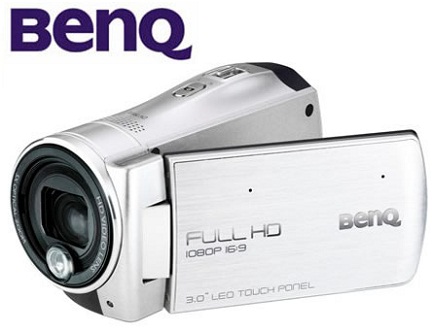
M11 BenQ DV Camcoder Reviwe

Early 2011 the last BenQ introduced a series of new M series camcorders. M Series Camcorder is a Full HD camcorder equipped with touch screens, such as M21 that we have reviewed previously. Compared to its predecessor, the M11 BenQ DV has several new features and improved specifications.


Specification :
  1. 10 megapixel CMOS sensor, with the ability to Full HD 1080p video recording and photo shoots to 16 megapixels (interpolated).
  2. 5x optical zoom lens.
  3. The touch screen LCD size 3 inches.
  4. New Feature: Touch exposure; face tracking; time lapse recording; slow-motion and accelerated playback; 3sec pre-recording and dual stream recording.
Scene Mode
Choose the best scene mode to automatically adjust the quality of your images. Press " Shooting Mode Icon" to select 1 out of the 10 scene mode listed below:
  • Night mode: Night scene was checked by luminance condition. S11 will do noise process and night scene metering to get good shot at night.
  • Sand/Snow: Increases contrast to highlight the texture and layers of snow.
  • Landscape: Enhance colour saturation to make a beautiful scene
  • Sunset: Uses a colour process to create a warm feeling
  • Portrait: Bases the range of luminance according to the human face to adjust the exposure
  • Flower: Takes a clear and vivid picture of flowers or plant leaves by emphasizing their saturation and sharpness
  • Sport: Decreases shutter speed to take sharp photos in motion
  • Fireworks: Adjusts exposure to enhance colour on a dark background
  • Aquarium: takes a picture of the subject in an aquarium. 
In view of the sensor used is a small sensor for recording the video then you do not need to expect much from the picture. ISO 100-400 produces a good image, although the sharpness is roughly equivalent to 7-megapixel sensor. At ISO800 noise has begun to harass, and increasingly severe in ISO1600. ISO3200 still be used if only for the size of the web, resized to 1 megapixel, while the ISO 6400 has been too forced.

Monday, November 7, 2011

3M CP45 Camcorder Projector

There are a number of camcorders or cameras that come with a built-in projector. 3M has rolled out a new portable camcorder known as the 3M CP45 which comes equipped with a built-in projector. The best of the 3M CP45 is it allows you to shoot video while sharing your pictures or HD videos with a press of a button on a large projection screen.


Features:
  • Brightness: 20 lumens of brightness produces a large 65" (diagonal) screen size.
  • Power: A 2100 mAh battery provides 150 hours recording time or 100 hours projected playback.
  • Media: Record HD video and 5mp photo's straight onto the device or download content from your favourite digital media sources: smartphone, iPod®, iPad®, portable DVD player, game console or laptop
  • Convenience: Record on the go and project straight back on to any flat surface at the touch of a button!
  • Control: Touch buttons make up an easily navigable control panel with one button record, playback and projection.
  • Sound: In built mono speaker with AV out connect to external speakers.
  • Connect: HDMI, Audio, Mini USB output with AV input
  • Storage: 2GB of built-in memory and a MicroSD card slot for expanded memory up to 32GB.

Saturday, November 5, 2011

Canon Announces Cinema EOS System Review

 Canon’s announced full-fledged entry into the motion picture production industry with the launch of the Cinema EOS System. Canon’s new professional digital cinematography system spans the lens, digital cinema camera and digital SLR camera product categories.

Canon  EOS C300 for Cinema

The camcorder, which features a newly developed Super 35 mm-equivalent approximately 8.29-megapixel CMOS sensor, will be available in two models: the EOS C300 Digital Video Camcorder, equipped with an EF lens mount for compatibility with Canon’s current diverse lineup of interchangeable EF lenses for EOS single-lens reflex (SLR) cameras and new EF Cinema Lens lineup; and the EOS C300 PL Digital Video Camcorder, with a PL lens mount for use with industry-standard PL lenses.


The camera records using MPEG-2 compression and saves the files in MXF format. Based on the Canon DIGIC DV III image processor, the EOS camera outputs 50Mb/s 4:2:2, recording to two CF cards. A third card slot can mount an SD card, which an operator can use to automatically upload an entire set of favorite presets. For rental applications, this permits the shooter to quickly configure multiple cameras to identical desired settings.

4K EF Cinema Lens Lineup

EOS C300/C300 PL Interchangeable-Lens Digital Cinema Camera

New Digital SLR Camera with 4K Movie Function (Under Development)

The Canon EOS C300/C300 PL’s newly developed Super 35 mm-equivalent CMOS sensor incorporates approximately 8.29 million effective pixels and has a pixel size that is larger than that for conventional professional camcorders, enabling greater light-gathering capabilities for enhanced sensitivity and reduced noise. The sensor reads Full HD (1920 x 1080 pixels) video signals for each of the three RGB primary colors, decreasing the incidence of moirĂ© while realizing high resolution with 1,000 horizontal TV lines

The list price for the Cinema EOS body including battery, charger and handles is $20,000. Units are expected to ship worldwide in January 2012. For more details, see Canon Broadcast.

Thursday, November 3, 2011

Samsung MultiView MV800 Camera Technical Details

Samsung has launched the Samsung MultiView MV800 digital camera. With this launch, the Company is pioneering a new “MultiView”category in response to evolving consumer demand for maximum flexibility and creativity.

Samsung DualView technology

Buy Directly from Amazon


Samsung MV800 Features

3-inch Wide Flip-out MultiView Touch Display

The 16.1MP 

Three shutter options

optical zoom is 5×

26mm wide-angle capability

ISO sensitivity up to 3200

720p/30fps HD video

HDMI port.


Wednesday, November 2, 2011

Panasonic LUMIX DMC-G3 Specs

Panasonic has announced the latest addition to its LUMIX G series of not-quite-compact cameras – the LUMIX DMC-G3. Smaller than a DSLR and larger than a pocket point-and-shoot, the G3 offers an interchangeable Micro Four Thirds lens mount, a 16 megapixel sensor, full HD video, and a rotating LCD touch screen.

Live Viewfinder

HD Video Capture

Faster, Accurate Pinpoint Focusing

More Burst Shooting Options  


Features

Product Type Mirrorless Camera
Battery Size Supported Proprietary
Maximum Video Resolution 1920 x 1080
Effective Camera Resolution 16 Megapixel
USB Yes
Wide Angle Yes
PictBridge Yes
Product Family Lumix G
Image Stabilization Optical
Colour Black
Optical Zoom 3x
Digital Zoom 2x
Brand Name Panasonic
Features External Flash Shoe, Face Detection, Self-timer, Serial Shot Mode, Live View
Screen Size 7.6 cm (3")
Video Formats QuickTime Motion JPEG
Weight (Approximate) 336 g
Minimum Focus Distance 300 mm
Maximum Image Resolution 4592 x 3448
Maximum Frame Rate 60 fps
Number of Batteries Supported 1
Battery Rechargeable Yes
Battery Included Yes
Display Screen Type LCD
Image Sensor Type Live MOS
Total Camera Resolution 16.7 Megapixel
HDMI Yes
Camera Assembly Body with Lens Kit
Memory Card Supported Secure Digital (SD) Card, Secure Digital High Capacity (SDHC) Card, Secure Digital Extended Capacity (SDXC)
Height 160 mm
Width 192 mm
Depth 145 mm
Autofocus Points 23
Product Series G
Focal Length 14 mm to 42 mm (Lens 1)
Image Formats JPEG, RAW
Flash Modes Auto Flash, Flash ON, Flash OFF, Red-eye Reduction, Slow Sync, Rear Curtain Sync
Focus Modes Auto, Manual
Manufacturer Panasonic
Product Model DMC-G3
Product Name Lumix DMC-G3 Mirrorless Camera
Product Line Lumix
Aspect Ratio 16:9
Manufacturer Part Number DMC-G3KK
Marketing Information Panasonic Lumix DMC-G3 offers the benefits of a DSLR interchangeable lens system camera with a point-and-shoot cameras compactness, light weight and simplicity. This reduction in size and weight is thanks to advancements in mirror-free viewfinder technology, and large DSLR format sensors that are more compatible with a new class of compact Micro Four Thirds (MFT) System lenses. This new class of Compact System Cameras (CSC) offers a weight and compactness not seen in traditional DSLRs, for greater portability and creative control. The DMC-G3 image resolution has been upgraded to 16.0 Megapixels from it predecessor the DMC-G2.
Battery Life 270 Shot
Display Resolution 460000 Pixel
Viewfinder Type Electronic

Buy Directly from Amazon

Check out the below video for more info..

Monday, October 31, 2011

PSCAM x35 Review

When Panasonic unveiled their unique VARICAM off-speed camcorder nearly 10 years ago the industry fell in love with its motion tricks but not it’s workflow. Now P+S Technik have maybe come up with a product that could better it.

It was truly revolutionary for the time as it allowed speed ramping from one frame a second to 60 at a time when the only off-speed capture available was from film cameras. It was only 720p with a 2/3inch sensor and recorded to a tape based DVCHD codec but allowed an early look in to digital slow motion as well as being a normal 25p synch-sound product. You had to be careful using it though as many found out when they recorded off speed footage to the same tape as their normal speed capture. You had to convert the off-speed footage through Panasonic’s own frame rate converter, one of the early pieces of advice was to record normal and off-speed footage on different tapes to avoid a long process of differentiating between frame rates.

The onboard memory (18 GB) allows recording of more than 4 mins in normal speed (memory with 9 GB or 36 GB planned). The standard switchable HD-SDI interface in 1,5 G & 3 G allows the integration into existing HD infra- structures and operation with existing and future-proofed HD-SDI recorders.

Features:

*Super 35 CMOS Sensor
*Global Shutter
*PS-IMS Lens Mount
*24-60fps via direct HD-SDI out
*1-450fps (continuously adjustable)
*4:2:2 10-bit uncompressed
*4:4:4 10-bit uncompressed (option planned)
*12-bt RAW uncompressed (option planned)
*18GB internal memory

Sunday, October 30, 2011

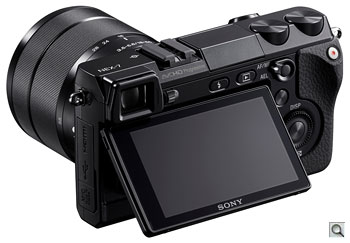
Sony Alpha NEX-7

NEX alpha-7 became one of Sony's latest camera concept that combines image quality with a professional yet friendly camera.


NEX-7 equipped with APS HD CMOS sensor Exmor newly developed 24.3 effective megapixel resolution, combined with the BIONZ image processor Sony's latest version.

With the tag-speed shutter release about 0.02 seconds, the camera is claimed as the fastest of all digital interchangeable lens camera in the world.
A variety of creative options settings are available through the control of the claimed new TRINAVI intuitive, where two-button control dial located on top of the camera is equipped by the control wheel.


Pressing the navigation key quickly while shooting modes which vary, allow users to create personal control and organize their images with the flexibility of a DSLR camera.


Sony Alpha NEX-7 Features

  • 24.3 megapixel sensor
  • 3.0” Xtra Fine LCD™ monitor
  • Tru-Finder™ OLED electronic viewfinder
  • Up to 10 fps continuous shooting
  • Tri-Navi™ manual control
  • Full HD Movies at 60p/60i/24p
  • HDMI® output
  • 11 Picture Effect modes
  • 25-point Auto Focus
  • Sony Exmor™ CMOS sensor
  • iAUTO mode

Fujifilm FinePix JX420 Digital Camera Reviwe

Fujifilm released this morning in Japan a new 16Mpix compact shooter with the FinePix JX240. Schedule for a launch early November, the JX420 will comes in four different colors including the usual Black, Silver as well as Pink and red for a market price announced at around 13,000 Yen.
 
Features

The Fujifilm FinePix JX420 digital camera may be small and pocketable, but the new camera peforms excelent when it comes to picture taking features. A wide range of photography modes allows you to select specific functions according to the type of photograph you're taking, or simply leave the choice up to the Fujifilm camera by selecting the SR Auto mode. The Fujifilm FinePix JX420 built-in flash also offers a range of features with auto, flash on, flash off and slow synchro options, while the ISO sensitivity range extends from ISO 100 to ISO 3200.

Wednesday, October 26, 2011

Pentax Q Interchangeable Lens System Camera

Small thing captures big. This is how we describe the Pentax Q .The world of photography becomes livelier with the presence of a new camera, Pentax Q. It is the smallest, lightest Interchangeable Lens Camera (ILC) in this universe. The tiny Q comes with an advanced technology and superior quality that every camera should have. The small DSLR in its versatile body is unavailable in any other digital ILC body anywhere yet. With the interchangeable lens,

Features

Available in both black and white, the Pentax Q has a retro-styled magnesium alloy body and is equipped with a 3-inch LCD monitor and 1/2.3-inch CMOS image sensor with 12.4 effective megapixel capability. The camera has a sensitivity range up to ISO 6400, full HD movie recording, continuous shooting at up to 5 fps, a maximum shutter speed of 1/2000 and a High Dynamic Range (HDR) function.


Five lenses launched :
  • F/1.9 lens equivalent to 47mm
  • F2.8-45 lens equivalent to 27.5-83mm with a built-in ND filter
  • Fixed F/5.6 manual-focus fisheye lens with a 160° angle-of-view, equivalent to 17.5mm
  • Fixed F/7.1 manual-focus lens equivalent to 35mm, labelled as Toy lens
  • Fixed F/8 manual-focus lens equivalent to 100mm, labelled as Toy lens

Tuesday, October 25, 2011

Lytro Announce First Light Field Camera


Ready for the world’s first light field camera — you know, the spiffy kind that can infinitely focus?


Lytro, the Mountain View startup that introduced a prototype in June, unveiled its first camera this week. Also called Lytro, the device allows users to create "living pictures" that can be refocused after they are shot
This is a Lytro light field camera, and its anodized aluminum and silicone skin hides an engineering feat — a proprietary sensor that the firm claims can capture 11 million rays of light instantly. That's paired to an 8x zoom lens